Posts tagged Θεοδώρα Λούκας
The Amateur, The Artist, and The Professional: The Triple Crisis of Modern Creation

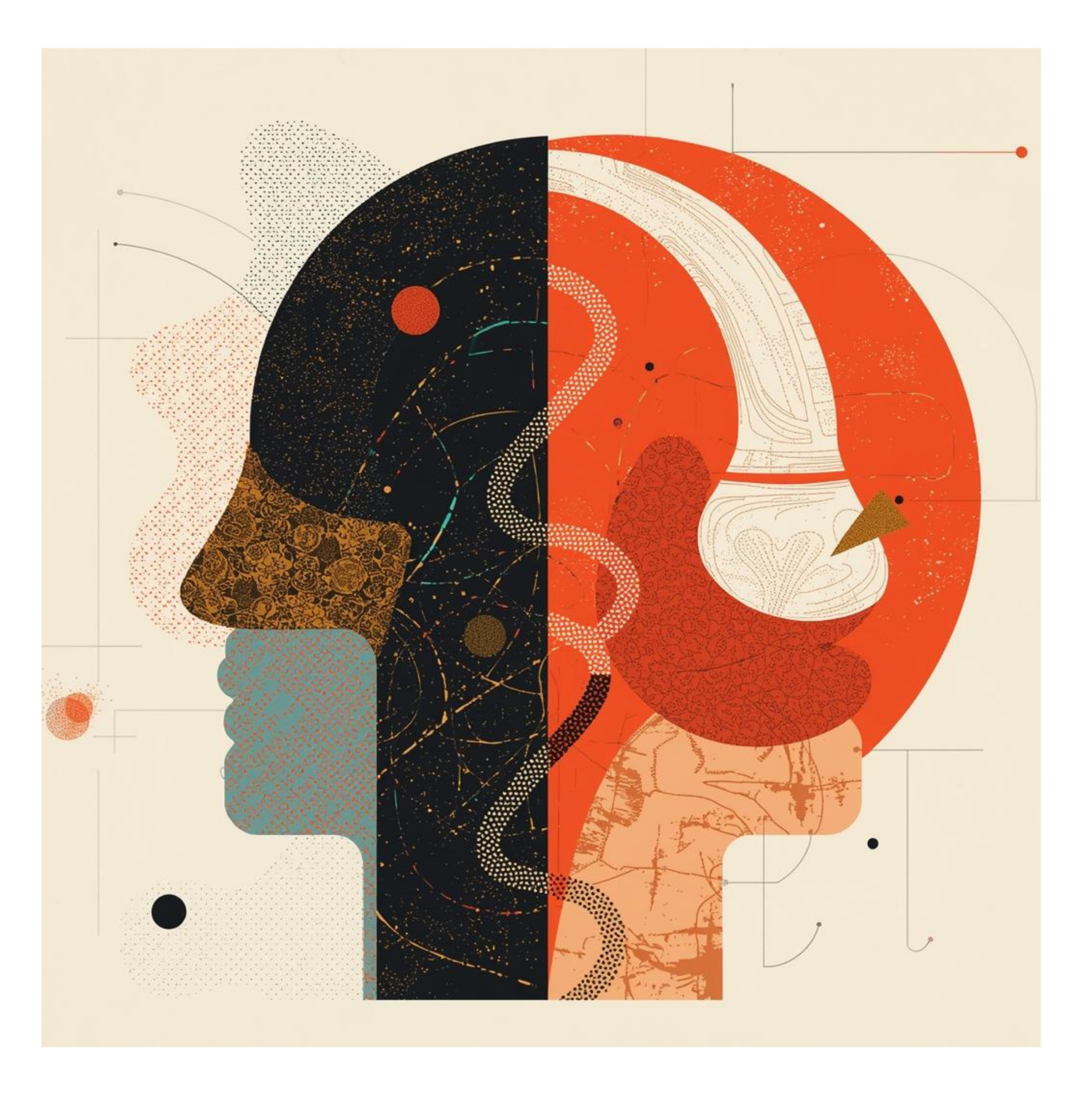
The contemporary creator walks on a fragmented landscape of three qualities that seem incompatible: those of the Amateur, the Artist, and the Professional. Each projects a different identity, a different justification, and a different destination. Their clash is not merely philosophical; it is the central agony of our cultural position and stance.

The amateur, as the primordial lover of art—the "amātor” ("lover")—is the birth of our creator. It was that primal connection with eros and passion for the process as an end in itself. We started with the "I feel," the "I discover," the "transformation"—where our love for what we experienced through the creative process could not be separated from our "breath." Our "work" at this stage was an emanation of a "vital need," not a "product." Everything began in a "sacred lab" that surpassed our "logic" and our "intent" to dominate or direct creation. Everything "happened" as if we were "holy vessels" of a sacred rite existing both beyond us and within us. The challenge was whether we would dare to share this creation with others or remain in the safe space of the private.

Thus, we moved to a new critical choice. To share this creative need and function with others and to join what is called artistry as an identity, in order to converse and communicate with others using creation as our vehicle. Art became the way and the space for our personal and universal expression. Now our new questions were: "What am I saying" with what I create, "What does this concern, for me and for others," "How does it provoke, move, change" the world around me through my truth and the truth I discover and share? The creative work became the end goal of bridging our inner world with the broader social world. The authenticity of our truth demanded a social negotiation in the need for collective communication. And here we faced our first great challenge: the passage from the personal to the collective. The delicate balance of expression between our lacks and our excesses: "art for art’s sake" or "art for a purpose."?

And so, we arrived at professionalism. At the creative work as a tool. We committed in a new way in terms of efficiency and protocols. And it was there, exactly there, that we compressed primordial love into a commodity for transaction. The initial "amateur" who became an "artist" is transformed into a professional - the producer. The love for the process developed a devotion of time in order to grow, only to ultimately succumb to its self-definition or hetero-definition in terms of the "market", and to be thunderously defeated. The professional of the market will be forced either to scorn or to submit to the occasional external demand. Their art will endure immense pressures to be standardized into whatever content (branding), and its value will have whatever "price." The internal "amateur" will lose its innocence, the artist their inner compass, and the professional, under the pressure of competition and survival, will dominate according to the law of "your death is my life."

The challenge here is not whether we choose black or white but how to become the guardian and observer of an endless redefinition of a conscious journey. The contemporary artist is called to either seek or shape the conditions that will allow them to continually return to the core of the "amateur," to the primary spark of their relationship with their purpose.

First pole: Discipline towards the purpose. The artist is not a machine. Their productivity is measured not by quantity but by quality. They have an absolute need for space and time for inspiration and creation, without any pressure or exposure to criticism or the demands of the market.

Second pole: Economic self-sufficiency and independence. The artist who can secure their survival from other sources of income is truly free. They are the ones who can say "no" to proposals that buy out the "soul" of their creativity and the freedom that enriches and multiplies it.

Third pole: Technical evolution as freedom. When the artist stops training and evolving, continuously broadening their horizons, but instead barricades themselves in the self-sufficiency of their acquired skills and "achievements," they atrophy—whether they admit it or not. Creativity presupposes continuous refeeding and a constant inoculation with the new. It is as if we once had a computer with a current software, and while technology advances, we stay behind. The artist needs constant updates... this fosters creativity and their realignment with research, experimentation, risk, and a renewed expression. Renewed techniques also refresh our primary connection with the Socratic "All I know is that I know nothing" and therefore with the pure search and unconditional love for the process of the "amateur."

In conclusion, the artist does not mature when they abandon the amateur within them. They mature when they learn to protect them, nourish them, and invoke them as the deepest source of their truth.

In our time, the great struggle is not to create a masterpiece. The great struggle is to not let yourself be turned into a product. The great struggle is to demystify the linear narrative of "professional ascent," to redefine our professionalism as a servant, not a master, of creation, and to honor the amateur within us not as an immature stage, but as the unique core that can save our art from commodification.

The contemporary artist is the one who uses all their means for a single purpose: to maintain the right, the opportunity, and the courage to never be a mere "professional" when it comes to the heart of their work.

The final work, then, will not simply be an object in the general market. It will be the bridging of a cycle: it will bear the elements of the Amateur (the purity and the process), the Artist (the expression and the depth), and the Professional (the completion and reliability). It will not be a product. It will be a way of living.
Love More — The Purpose of Theatre

Deeply inspired today by Grace Paley who said

The world has no need to be represented: there it is, all around us, all the time. What it needs is to be loved better. Or maybe, what we need is to be reminded to love it and to be shown how, because sometimes, busy as we get trying to stay alive, loving the world slips our mind.

This is the purpose of Theatre for me.

And if I may rephrase Grace Paley, I would say that the purpose of Theatre is not merely to mimic life onstage, as life is all around us.

The purpose of Theatre is to remind us to open our hearts and to love what we otherwise do not see, pay attention to, or understand — to recognise that we are all part of a shared humanity, its nature and its condition.

In theatre we are invited to pay careful attention for an hour or two, offering time, presence and soulful curiosity to truly learn and empathise with the living experience, moment to moment, of human beings who are not as different to us as we otherwise perceive in our daily lives.

It gives us the rare chance to witness how little truly separates us, to watch those imagined boundaries soften and fall away, and to recognise how profoundly similar we all are beneath our rushed attempts to emphasise differences, opening a space for compassion, connection, and a renewed love and understanding.

By witnessing the full, flawed humanity of another, theatre forgives our shortcomings, renews our spirit, and gently invites us to love others — and ourselves — more deeply and more fully.

Theatre, in its essence, is a persistent, collective call to honor our shared humanity and the messy, miraculous life itself.

Ultimately, theatre is a luminous rebellion against indifference: a living, breathing ritual that gently draws us back together by asking us, again and again, to see more clearly, to feel more deeply, and to respond with an open, generous heart — to remember, to cherish and to forgive; to hold tenderly the truths we share, to honor our shared fragility, and to love all that we are and all we can become, cultivating a heart increasingly open to love, to accept, to risk, and to embrace our potential, awakening a higher awareness, a renewed compassion, and eventually our capacity for love.

The 7 Steps to Authentic Acting

Step 1

Know Thyself

“The actor needs to work on himself” - Michael Chekhov

In order for an actor to truly connect with his instrument from a genuine place of truth and deep vulnerability, the actor must first and foremost dedicate time to working on himself. This involves a sincere and ongoing process of self-reflection and growth. Additionally, the actor needs to keenly observe the human condition, beginning with his/her own experiences and emotions, and then attentively extending this understanding to the people around him/her. This combined self-awareness and empathetic observation form the foundation for authentic performance.

STEP 2

Trust Yourself - Trust your Humanity

"In acting everything comes out of what you are, or some aspect of who you are." - Marlon Brando

Emotional honesty is the crucial next important step for an actor who is already developing the foundation laid in STEP 1. In theatre, and even more intensively in film, we aim to reveal the entire spectrum of the emotional and existential life of a human being. This means we must avoid, at all costs, any hint of “acting” in the superficial sense, and instead, wholeheartedly pursue “being” the person we embody in the story. We commit to telling that story with complete honesty, fully investing ourselves in the circumstances, as if our very own life depends on the truth of the moment.

STEP 3

Surrender

"Be in the moment. Period. Just be there. Because if you get all like, 'Oh I got to do this big thing.' It just never works. It just doesn't work. You've just got to let go. If it happens, it happens. If it doesn't, it doesn't. Whatever you do is ok, just be truthful, honest, real, and that's all you can ask for" - Robert De Niro

Allow yourself to be fully open and deeply invested in the present moment, embracing it with all your senses and emotions. As the great David Mamet wisely advises, “Invent nothing, deny nothing.” This means truly connecting to the material, the unfolding story, the specific circumstances, and your fellow actors from a place of uninterrupted, genuine presence with them, moment to moment. Trust yourself and the vibrant creative source that lives inside you. When you stay open and receptive, creativity will reveal itself in the most unexpected and magical ways—provided you don’t interfere or try to control it. Let your natural impulses guide the work, allowing your raw humanity to respond authentically. Take in and listen carefully to everyone around you, absorbing their energy fully. Listen not just with your ears, but with your whole body—feel every emotion as it arises. Absorb everything with your heart, letting it be your compass for truthful responses. Step your analytical mind completely out of the equation; it’s rarely your ally in the creative process. This moment is the birth of something unknown, even to you. It’s not the time or place for rigid plans or preconceptions. The less you rely on your mind telling you what to do and how to do it, the more authentic your connection to the material will be. In this surrender, creativity flows spontaneously and naturally in the most genuine, powerful ways.

STEP 4

Prepare and Let go

“Flip it. Hit the stage and go; “Keep up”. But you’ve got to do the work. You can’t do that without preparing the work. The great ones work that hard all the way to the end.” - Jeff Daniels

Prepare with unwavering discipline and dedication, but when you step on stage or in front of the camera, allow yourself to fully let go. Preparation is absolutely essential: diving deep into script analysis, understanding the story and the characters, maping out the beats in each scene, identifying the objectives etc.. Yet, when it’s time to perform, all of that hard work must be trusted as being internalised, as being part of the new story-bound you. When onstage or onset we are fully present in the moment and open to collaboration. We are not there to showcase our homework or act as planned. Don’t display your preparation, don’t try to control the outcome, don’t manipulate the process, and definitely don’t play the text… instead, let the text play you. Prepare so deeply that you connect with the story, and rest assured, the story connects back to you. Then, trust that your body and mind have stored all the vital information they need, and know that when the moment demands it, what needs to emerge will. Let openness, authenticity, and the rawness of your humanity inform every choice you make as an actor. Release control, release fear, release self-doubt, release all those heavy expectations that weigh you down. Cherish unpredictability, welcome messiness, and allow the genuine truth of real life to flow freely into your performance.

STEP 5

Be Consistent

“Without commitment, you'll never start. But more importantly, without consistency, you'll never finish" - Denzel Washington

And now that you’ve gone that far and you have achieved so much, this is the perfect time to truly focus on practicing consistency. Authenticity is yet another muscle to strengthen, one that is incredibly delicate because it’s so fine and subtle—it can easily get weakened if it isn’t nurtured with regular consistency, unwavering focus, and genuine dedication. Never assume that authenticity will simply be there unless you make it a priority to consistently pursue it, with daily practice and pursuit. It begins with being authentic every moment in your life and then it will flow smoothly into your art cause that’s all you practice. Practice on your own, but most importantly practice being authentic with others each and every moment. Don’t hesitate to seek out a good teacher or coach who will keep you accountable, challenge you, and truly help you grow in this fascinating self-discovery road.

STEP 6

Embrace your Uniqueness


”There is a vitality, a life force, a quickening
that is translated through you into action,
and because there is only one of you in all time,
this expression is unique.

If you block it,
it will never exist through any other medium
and be lost.
The world will not have it.

It is not yours to determine how good it is;
nor how it compares with other expressions.
It is your business to keep the channel open.
You do not even have to believe in yourself or your work.

You have to keep open and aware directly
to the urges that motivate you.
Keep the channel open.

No artist is ever pleased.
There is no satisfaction whatever at any time.
There is only a queer divine dissatisfaction;
a blessed unrest that keeps us marching
and makes us more alive than the others.” - Martha Graham

Embrace fully each stage of the journey you’re currently on, and understand that truly deepening your authenticity in your work requires both time and a steadfast commitment to yourself and your art. Celebrate what makes you different and unique—even those quirks or qualities others might label as “weird” or unusual. Accept those very traits and brand them as your signature niche. Dare to be different. Share your one-of-a-kind uniqueness boldly with the world around you. Resist the urge to fit in or dilute your uniqueness and creativity just to make it in the business. Welcome the discomfort and vulnerability that come with being your authentic self, even if it brings moments of fear or embarrassment. This is your unique power. Nurture it, cultivate it, and develop a truly visceral point of view. Remember, you are an artist!

STEP 7

Have fun

"Acting is fun for me and it doesn't really matter how, whether it's hard work or easy work, it's always fun" — Tommy Lee Jones

And as we wrap things up, let’s not forget the pure joy and excitement that comes from our conscious decision to act. To be completely swept away in that magical, creative flow that only a genuine, truthful, and authentic immersion in the work can offer. Let it carry you effortlessly – do less, relax more, and it will naturally do it all for you. Learn to let go of control, take the risk of riding the unpredictable wave, embrace all the vulnerability and insecurity that comes with the territory, and allow yourself—and the process—to surprise you in the most unexpected ways. Play like a carefree kid pretending to be a cowboy in the backyard, and trust deeply that if you believe it, we will also believe it. Have fun creating, truly enjoy your bold choice to be an actor, trust your unique instrument, dare to take risks by being yourself, and above all release any attachment to the outcome. Acting is a craft that continually deepens and improves through experiencing all kinds of twists and turns — and it’s definitely a journey meant for the most passionate, creative and resilient souls. See you at work!